Beyond Graves’ disease: Rethinking neonatal hyperthyroidism
Neonatal hyperthyroidism typically occurs in babies born to mothers with Graves’ disease. However, providers should consider other causes when maternal Graves’ disease is not present. That was the case with a patient treated at the Pediatric Thyroid Center at Children’s HealthSM, who presented with tachycardia in utero.
“It’s incredibly rare to be symptomatic as a fetus,” says Diana Diesen, M.D., Pediatric Surgeon at Children’s Health and Associate Professor of Surgery at UT Southwestern. Dr. Diesen coauthored a paper describing the rare phenomenon: a hyperfunctioning thyroid nodule causing symptoms before birth. Published in the Journal of Pediatric Endocrinologyand Metabolism, the case study underscores the value of early imaging and multidisciplinary pediatric thyroid care.
Hyperthyroidism can cause significant problems with growth and development, and the right treatment plan depends on an accurate and timely diagnosis. The Pediatric Thyroid Center at Children’s Health is one of a select few in the nation, and the only center in North Texas, with a team of specialists dedicated to diagnosing and treating children with thyroid disorders both rare and routine.
The discovery: An unusual presentation of congenital hyperthyroidism
Workup of the patient began in utero, when providers recorded fetal heart rates in the 200s. After birth, the infant continued to have tachycardia and hypertension, and testing revealed low thyroid stimulating hormone and elevated free T4. Although the baby’s mother had no indication of a thyroid disorder, the findings suggested the infant had neonatal hyperthyroidism.
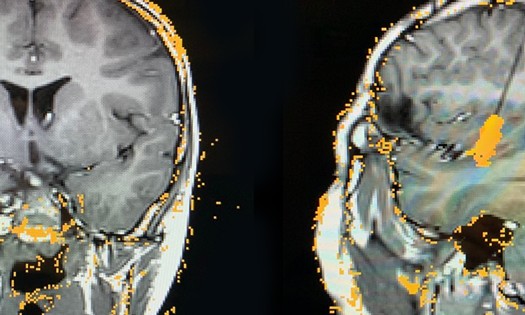
Most babies with neonatal hyperthyroidism are born to mothers with Graves’ disease. The maternal antibodies cross the placenta and cause hyperthyroidism in the baby. Patients usually outgrow neonatal hyperthyroidism by 2 to 3 months of age. But this baby continued to experience an elevated heart rate, flushing, loose stools and excessive sweating. When he was around 6 months old, the patient began receiving methimazole, which improved thyroid function and decreased symptoms. When the patient returned for follow-up, the team noted hyperactivity, hyperphagia, speech delay and accelerated bone growth. Lab testing revealed persistent hyperthyroidism. Further testing with an ultrasound and a nuclear medicine study demonstrated a “hot” nodule within the thyroid gland that was producing thyroid hormone.
“A neonatal hyperfunctioning thyroid nodule is already rare, and having one that is symptomatic prenatally is highly unusual,” says Christopher Liu, M.D., Pediatric Otolaryngologist at Children’s Health and Associate Professor at UT Southwestern.
As a team, Dr. Liu and Dr. Diesen performed a total thyroidectomy, because the nodule extended into both sides of the thyroid gland. Pathology indicated the nodule was benign. Postoperatively, the patient’s symptoms resolved.
What to know: Why a closer look matters
While cases of symptomatic fetal hyperthyroidism are rare, thyroid disorders in children are not – and they warrant a closer look. “Compared to nodules in adults, pediatric thyroid nodules are more likely to be cancerous, with an incidence of malignancy between 22% and 26%,” Dr. Diesen says.
Benign nodules can also cause problems. If they grow rapidly or become large, they can cause compressive symptoms like trouble swallowing or difficulty lying flat. “In those cases, surgical removal is recommended. In fact, thyroid nodules are the most common indication for thyroid surgery in children,” Dr. Diesen says.
Size is not the only concern. Hot nodules independently produce thyroid hormones, leading to hyperthyroidism that can disrupt growth, metabolism and development.
Given these risks, it’s important to not assume that neonatal hyperthyroidism is always caused by Graves’ disease, particularly in patients born to mothers without the disease, Dr. Diesen says.
“Providers should consider early thyroid imaging and surgical referral to rule out the presence of thyroid nodules in neonatal patients who present with hyperthyroidism in the absence of maternal Graves’ disease,” Dr. Liu adds.
Multidisciplinary care for pediatric thyroid disorders at Children’s Health
Diagnosing hyperthyroidism in infants and children isn’t always straightforward. What’s more, thyroid disorders may be associated with hereditary conditions. Patients with multiple endocrine neoplasia syndromes, for instance, have a nearly 100% lifetime risk of developing medullary thyroid cancer, often at a young age.
Given the complexity of these diagnoses, pediatric patients benefit from receiving care at specialized centers. At Children’s Health, the thyroid team includes pediatric surgeons, ENT surgeons, endocrinologists, and oncologists, as well as dedicated anesthesiologists, pathologists and radiologists who are skilled at diagnosing and treating these conditions. They work closely with experts in hereditary diseases to screen children at high risk for thyroid cancers. “By bringing this specialized expertise together in one team and offering all of these services together in one location, we provide comprehensive patient-focused care to families,” Dr. Diesen says.
Learn more about the Pediatric Thyroid Center at Children’s Health.