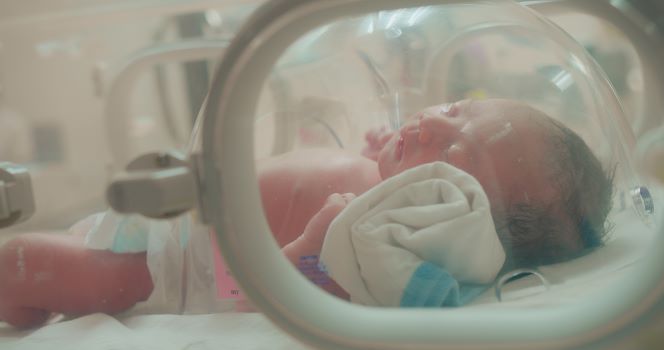
Parents of newborns who spend long periods in the NICU often come away from the experience with a heightened sense of worry about their child’s well-being.
A recent study from Children’s HealthSM and UT Southwestern showed that cognitive behavioral therapy (CBT) can decrease parental perceptions of child vulnerability (PPCV) and give parents the skills they need to face life after the NICU with more confidence and less fear.
After only five CBT sessions administered over three months, parents in the study scored significantly lower on the Vulnerable Baby Scale – the standard measurement for PPCV in the neonatal field. These parents also experienced less depression and anxiety than those who didn’t receive CBT.
“The right counseling at the right time can change the whole story for parents and their children,” says lead investigator Margaret Hoge, M.D., Medical Director of the Thrive NICU Follow-Up Clinic at Children’s Health and Assistant Professor at UT Southwestern. “Eventually I hope to see practices like this become a new standard of care in NICUs everywhere.”
Perceived risk can lead to real consequences
Long stays in the NICU can be the first domino in a series of challenges and consequences for parents. Up to 80% develop post-traumatic stress disorder. As a result, many develop high PPCV. In the study, almost 9 out of 10 parents developed that heightened perception.
PPCV can lead to the last domino: genuine deficits in a child’s experience and development, known as child vulnerable child syndrome (VCS). Parents can feel so protective of their child or overwhelmed by the perceived threats to the child’s health, that they behave in ways that inadvertently limit the child’s growth. As a result, children with VCS often have developmental delays and mental health problems of their own.
“It all starts with the parents’ mental health – but there are no standardized screenings or services to spot or support the parents who need help,” Dr. Hoge says.
Helping parents develop the skills to help them post-NICU
The study at Children’s Health was the first in the world to focus on how CBT could support parents after their child leaves the NICU.
“After discharge, parents are home alone with a baby who used to need serious help. So, their sense of fear and fragility can be especially sharp,” says Dr. Hoge.
Parents in the study attended three private CBT sessions once a week leading up to discharge, then two final sessions one month apart. Initial sessions focused on CBT fundamentals, like how thoughts inform feelings and actions. Subsequent sessions focused on how parents could use CBT to navigate scenarios they’re likely to face with their children.
Dr. Hoge developed those scenarios based on what her colleagues commonly see at the Thrive Program and clinic – for example, parents rushing into the clinic or emergency department because their baby vomited or developed a cough.
“We want to empower parents to choose different thoughts and actions than the ones their trauma will choose for them,” she says.
Empowering parents to worry less and trust themselves more
The value of CBT for parents in the study was unmistakable. The research team used the 10-question Vulnerable Baby Scale (VBSc) to measure a parent’s PPCV, with heightened PPCV defined as scores of 27 and higher.
Parents in the control group started with a baseline of 35 and saw no improvement six months later. For parents who received CBT, the median score fell from 33 prior to therapy down to 27 afterward. “That means some parents receiving CBT moved down to moderate PPCV, and the rest were close to that threshold,” Dr. Hoge explains.
Parents also exhibited a wealth of new skills, including constructive ways to interpret events and develop realistic views of their children. For example, say a baby develops a cough. At first, the parents feel scared and want to run to the ER. Instead, they use their skills: They breathe. They look at the facts. The baby is acting normal otherwise, so they stay home. And the baby proves to be fine. “The more experiences the parents have like this, the more they trust themselves and realize they don’t have to worry so much,” Dr. Hoge says.
The study was conducted in 2019-2020, so the babies are now 5-year-olds. Dr. Hoge hasn’t published data on the children’s outcomes, but fewer children in the intervention group have developed delays than those in the control group. Dr. Hoge recently saw one family from the study in clinic. “The mom told me she still uses the skills every day. It helps her feel more confident as a parent.”
Why Children’s Health: Expert neonatal care that includes the parent
Children’s Health is a national leader in neonatal care and research, including continuous efforts to improve care and outcomes for perinatal asphyxia led by Lina Chalak, M.D., Division Chief of Neonatology at Children’s Health and Professor at UT Southwestern.
For Dr. Hoge, her interest in the parent as a factor in neonatal outcomes began long ago. She had a 3-year-old patient whose speech delay had no medical explanation – but whose mother admitted to being depressed ever since the child nearly died after birth. Dr. Hoge sought help for the mother in order to help the child. “Children receive follow-up care after leaving the NICU, but to get the full picture we have to follow the parents as well,” she says.
Her future research plans include expanding this CBT approach to more parents via telehealth, exploring CBT for NICU-associated conditions besides prematurity and studying how treating PPCV in parents affects long-term outcomes for their children.
Learn more about comprehensive neonatal care both in and outside the NICU at Children’s Health.